

For a lot of people, walking into a dental office feels a little like stepping onto a stage when you didn’t sign up for the show: your heart races, your hands get clammy, and suddenly you’re reconsidering that appointment you’ve been putting off for months. Dental anxiety is more common than most people realize, and it’s one of the biggest reasons people avoid the care their smiles genuinely need.
That’s exactly why sedation dentistry is one of the most important things we offer at Countryside Dental & Aesthetics. Dr. Yokeca Watts and Dr. Jenai Bostic built this practice around the belief that comfort and connection should never be an afterthought. For patients who come to us nervous or even flat-out afraid, sedation is one of the most powerful tools we have to make dentistry feel safe again.
What Sedation Dentistry Is (and Isn’t)
Research published in a 2023 PMC study found the global estimated prevalence of dental anxiety to be around 15.3%, meaning nearly 1 in 6 people struggle with it on a real, meaningful level. Think of sedation dentistry like a volume knob for your anxiety. It doesn’t knock you out the way general anesthesia does during surgery. Instead, it simply turns the worry down low enough that your body can relax, your mind can quiet, and the appointment can actually get done. You’re still present, still able to respond to us if we need something, but the white-knuckle tension that usually follows you into the chair just isn’t there.
It’s also worth saying this clearly: sedation is not a sign that something scary is happening. It’s actually the opposite. When patients are calm and comfortable, we do better work, procedures go more smoothly, and you walk out feeling like the whole experience was nothing like what you were dreading.
Who Is Sedation Dentistry For?
Sedation isn’t just for the most extreme cases of dental fear. It’s genuinely helpful for a wide range of patients and situations. Some people have had a bad experience in the past that’s stuck with them. Others have a sensitive gag reflex, a low pain threshold, or simply struggle to sit still for longer appointments. There are also patients who’ve been putting off preventive dental care for so long that they need a lot of work done at once, and being relaxed through that process makes a real difference in their overall health journey.
The common thread isn’t the reason; it’s the result. Sedation helps people get the care they need, without the mental toll that kept them away in the first place.
Our Three Levels of Sedation at Countryside Dental
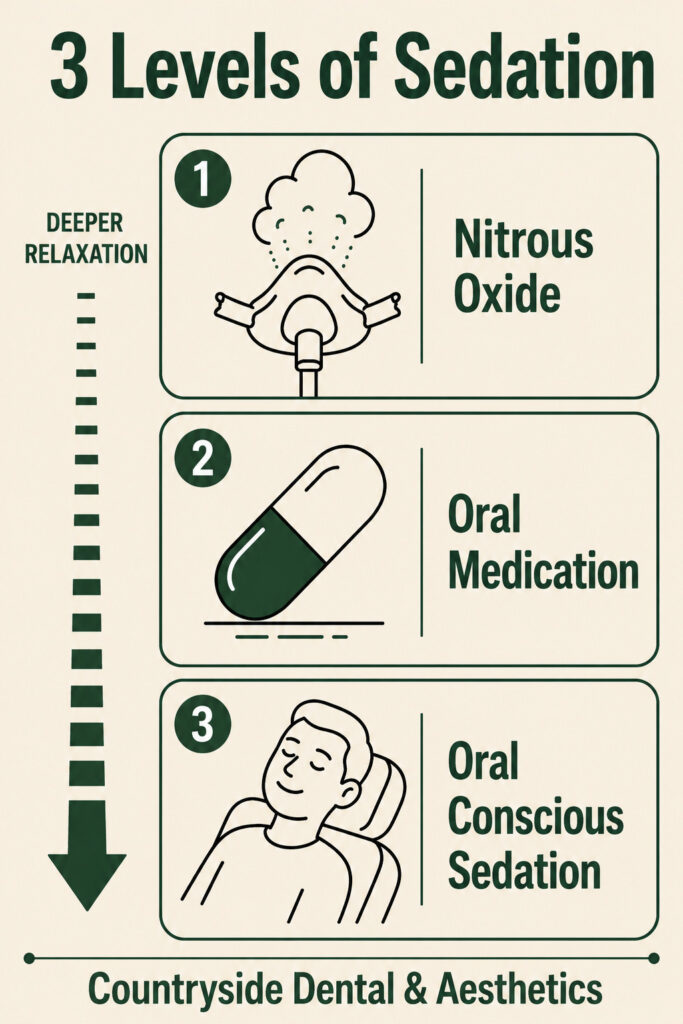
We use a simple framework that we love because it just makes sense: Level 1, Level 2, and Level 3. The higher you go, the deeper the relaxation. Think of it like adjusting the temperature in a room. You find what’s comfortable for you.
Here’s how we break it down for patients:
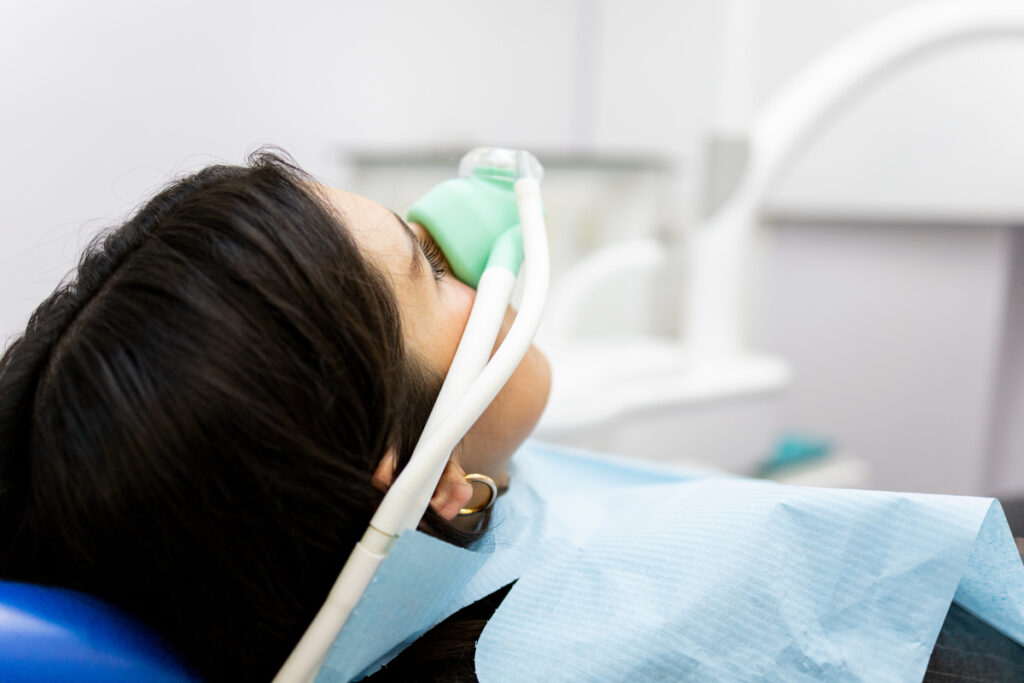
- Level 1: Nitrous oxide, which most people know as laughing gas. A small mask rests over your nose, and within a few minutes, that tight, anxious feeling softens into something much easier to carry. Your pain threshold increases, so even injections feel more comfortable. Best of all, it clears your system quickly so that you can drive yourself home afterward.
- Level 2: A single relaxation medication, usually an anti-anxiety prescription, taken before your appointment. It’s the kind of calm that feels like turning the volume down in a noisy room. You’re aware of what’s going on, but you genuinely care less about it. This can also be combined with nitrous for a deeper effect.
- Level 3: Conscious sedation, which is the approach Dr. Watts has been refining for over seven years. You take a combination of medications, some the night before and some about 30 minutes before your appointment. By the time we get started, you’re in a gentle, hazy, dreamlike state. You can still hear us and respond, but you won’t remember much of the appointment afterward. It’s the gold standard for patients with significant fear or those needing longer procedures like dental implants or oral surgery.
No matter which level is right for you, we talk through everything beforehand so nothing comes as a surprise.
What to Expect Before, During, and After Your Appointment
Before your sedation appointment, we’ll go over everything with you so you feel completely prepared. One thing Dr. Watts always makes sure patients understand about Level 3 is that, even when the medication kicks in, you may still feel wide awake. That’s completely normal, and it’s exactly how conscious sedation works. We’ve done this enough to know when you’re where you need to be, and we won’t start until you are.
During the appointment, you’ll be comfortable and at ease. For higher levels of sedation, you’ll need a trusted person to drive you home and stay with you for a bit while the medication finishes clearing your system. After a Level 3 appointment, most patients wake up with little to no memory of the procedure, and that’s exactly the point.
How Do We Decide Which Level Is Right for You?
Choosing a sedation level starts with a conversation, not a form. We ask about your specific fears, past dental experiences, how long the planned procedure will take, and whether you have any health conditions or medications that need to be factored in. A patient who only feels a little tense might do well with nitrous alone, while someone with significant dental phobia or a longer procedure ahead, like multiple extractions or implant placement, may benefit more from Level 2 or Level 3. There is no wrong answer here, and it’s completely normal to try one level and decide a different one fits better next time.
Is Sedation Dentistry Safe?
Sedation dentistry has a strong safety record when it is planned and monitored appropriately, which is exactly why we review your full health history and current medications before recommending any level. Vital signs are monitored throughout higher levels of sedation, and dosing is tailored to your body rather than applied as a one-size-fits-all protocol. Being upfront with us about your health history, including any heart, lung, or liver conditions, allergies, and every medication or supplement you take, is one of the most important things you can do to help us keep your appointment both comfortable and safe.
The Comfort We Build Around the Experience
Sedation is just one layer of the care we provide for nervous patients. When you arrive at Countryside Dental & Aesthetics, you’ll receive a comfort menu with options such as blankets, headphones, a neck pillow, and aromatherapy. We set the room up based on your preferences before you even come back. It’s a small thing, but it signals something important: we thought about you before you got here.
Our team, led by Dr. Watts and Dr. Bostic, understands the whole picture. They both bring warmth and a calm, grounded presence to every appointment, and that matters just as much as the medication. The goal of our cosmetic dentistry, restorative work, and preventive care is a smile you feel proud of. Sedation is simply how we make sure fear doesn’t stand between you and that outcome.
Frequently Asked Questions About Sedation Dentistry
Will I be completely unconscious during sedation dentistry?
No. Sedation dentistry, even at Level 3, is not general anesthesia. You remain able to breathe on your own and respond if needed, though many patients remember little to nothing of the appointment afterward.
Can I drive myself home after sedation?
After Level 1 nitrous oxide, most patients can drive themselves home since it clears the system quickly. For Level 2 and Level 3 sedation, you will need a trusted person to drive you home and stay with you while the medication finishes wearing off.
Is sedation dentistry covered by insurance?
Coverage varies by plan and by the level of sedation used, so it’s worth reviewing your specific benefits with our team before your appointment so you know what to expect.
Do I need to fast before a sedation appointment?
For higher levels of sedation, you will typically be asked not to eat or drink for a set period beforehand. We provide specific instructions ahead of time based on the sedation level planned for your visit.
Can children receive sedation dentistry?
Nitrous oxide is commonly used for children who feel nervous during dental visits and is generally well tolerated. Higher sedation levels for children are considered on a case-by-case basis depending on the procedure and the child’s health history.
Countryside Dental & Aesthetics: A Dental Home for the Nervous, the Busy, and the Long-Overdue
If dental fear has kept you from the care you know you need, you are not alone, and you are not out of options. At Countryside Dental & Aesthetics, Dr. Yokeca Watts and Dr. Jenai Bostic have spent years creating a practice where nervous patients feel genuinely safe, not just tolerated. Between the three levels of sedation, the comfort menu waiting for you when you arrive, and a team that takes the time to actually listen, this is a different kind of dental experience. We are proud to be the only female-owned dental practice in Troup County, and we built every part of this office with you in mind.
When you’re ready to take that first step, we’re here for it. Learn more about the doctors behind the practice and then schedule your appointment online: no pressure, no judgment, just a team that genuinely wants to help.